


Best of Aviation
Page 1 of 13
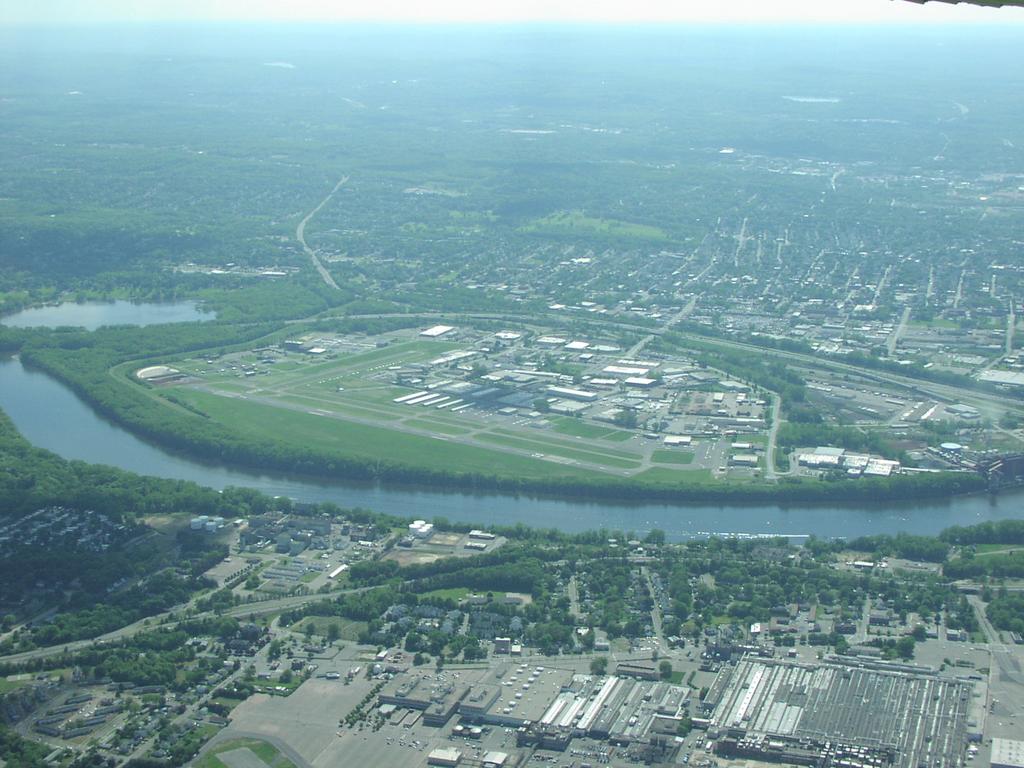
Nestled in a bulge in the Connecticut River, the Hartford-Brainard airport is one of our refueling stops on trips through the northeastern states. |
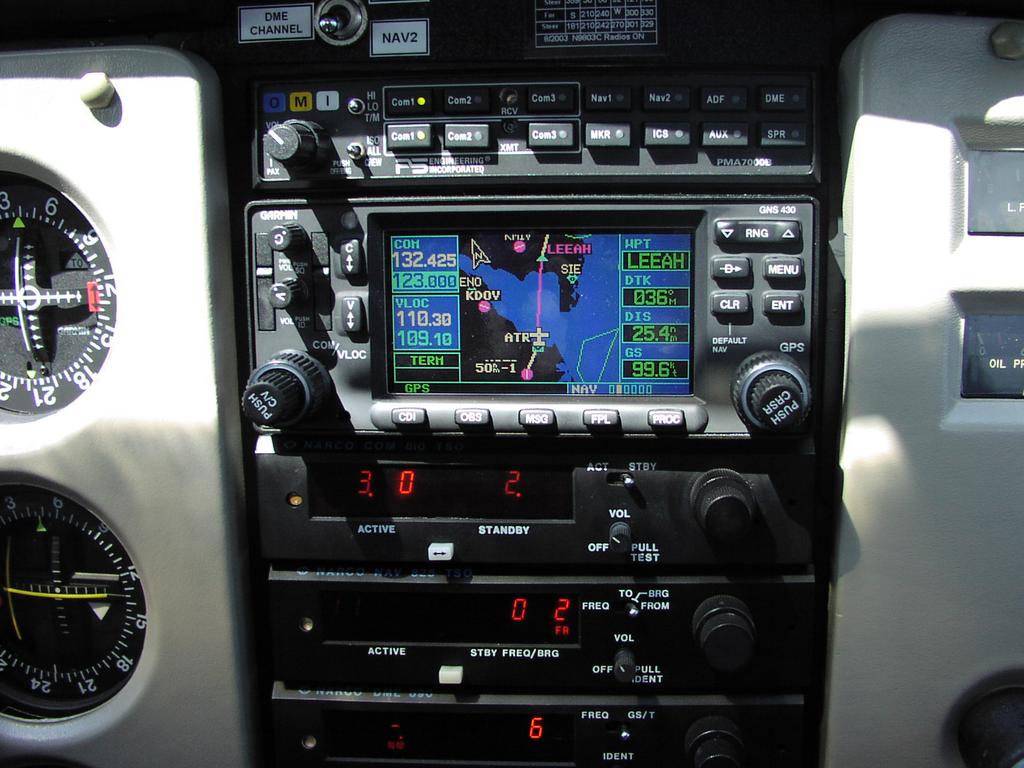
Shortly after departing Georgetown, Delaware, we are just about to cross a stretch of water enroute to southern New Jersey. LEEAH is the next intersection along our route. |
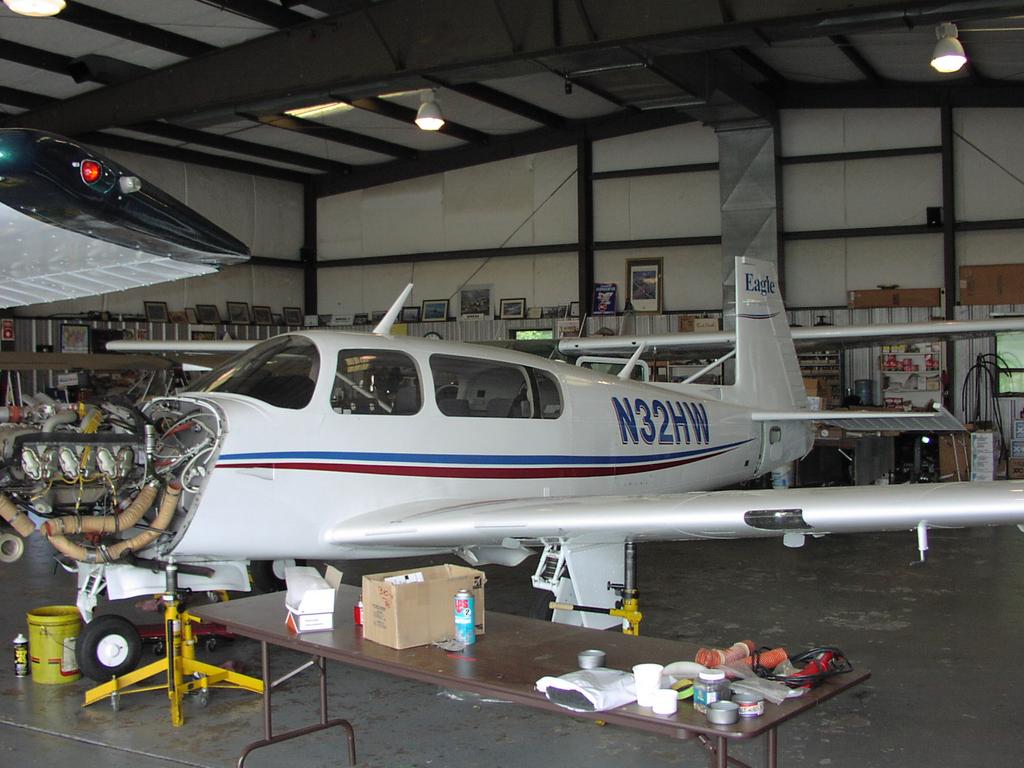
One of my favorite airplanes, the Mooney is extremely fast and fuel efficient. This particular model will do 200 MPH easily while burning around 15 gallons of fuel per hour. |
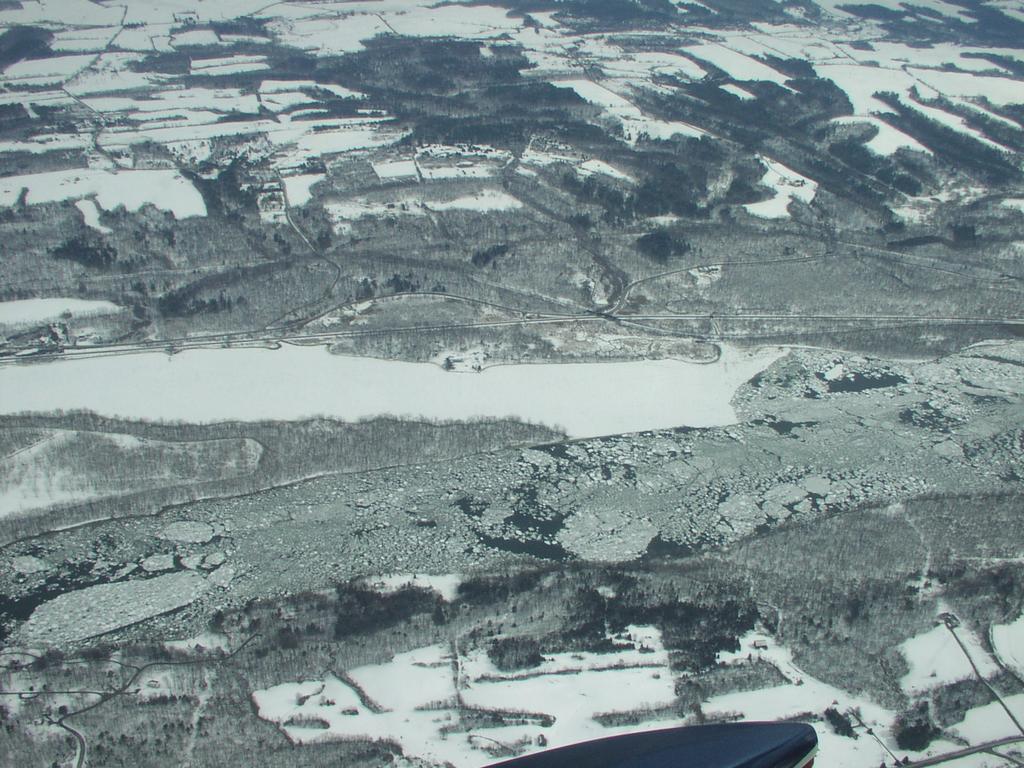
A closeup of the Hudson River just south of Albany in winter. |
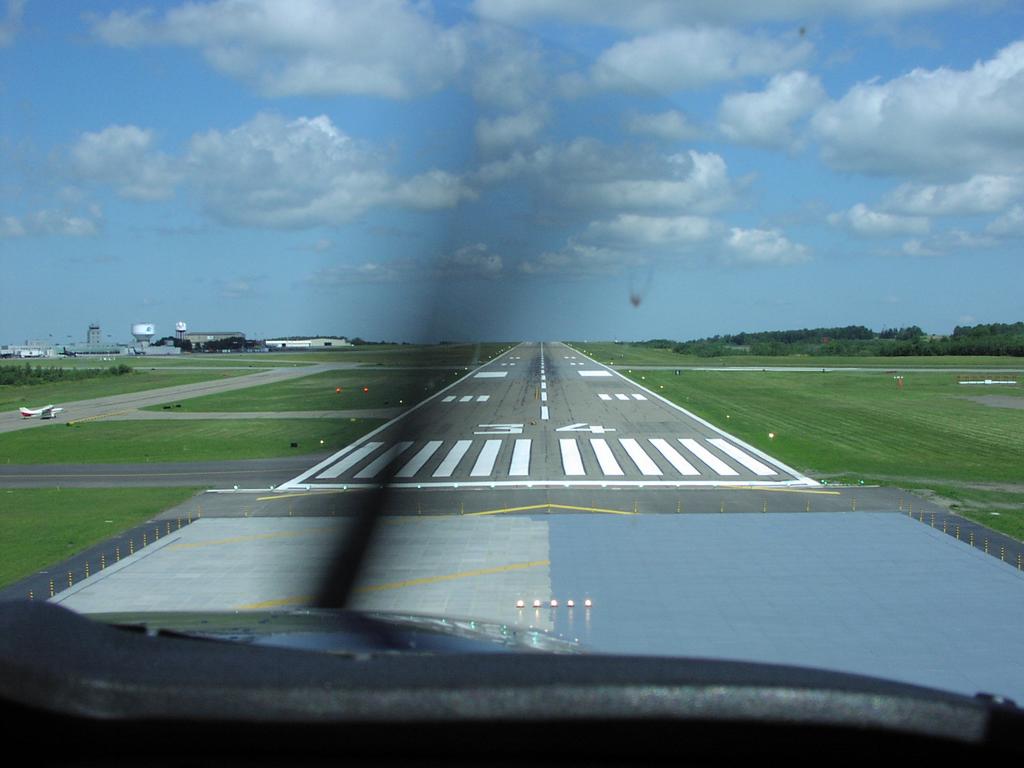
If you will excuse the photographic error, this is a great perspective on what pilots see when landing at a large airport. This happens to be runway 34 at Binghamton, New York. |
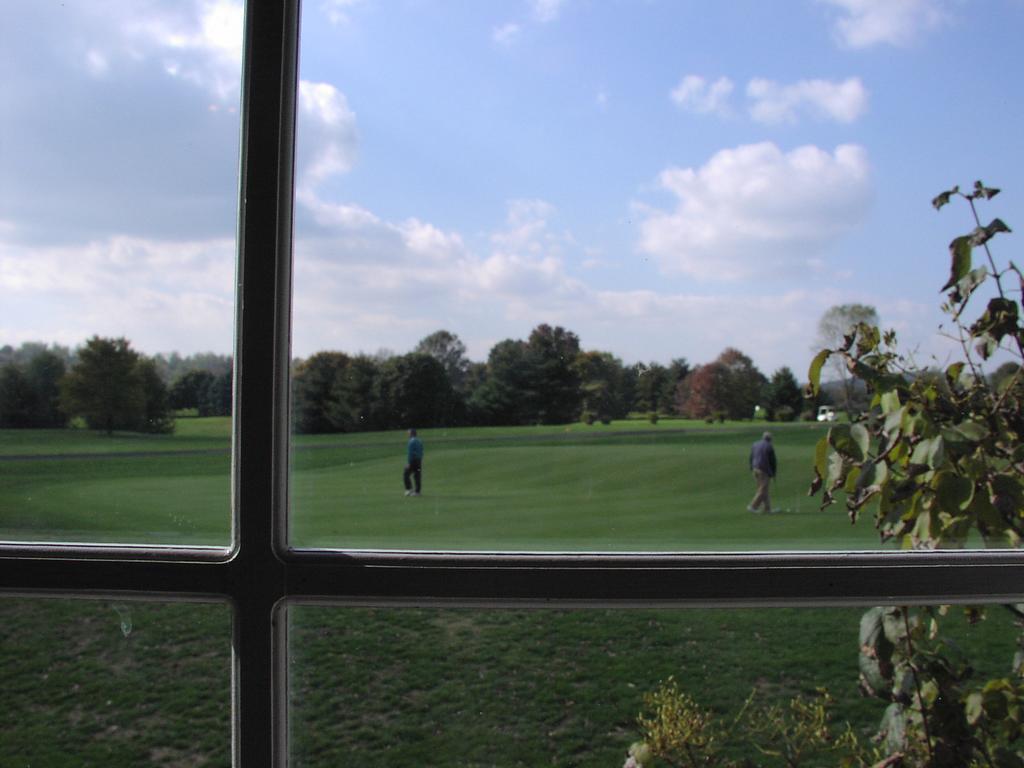
Aviation and golf go together, and this airport combines the two avocations nicely. |
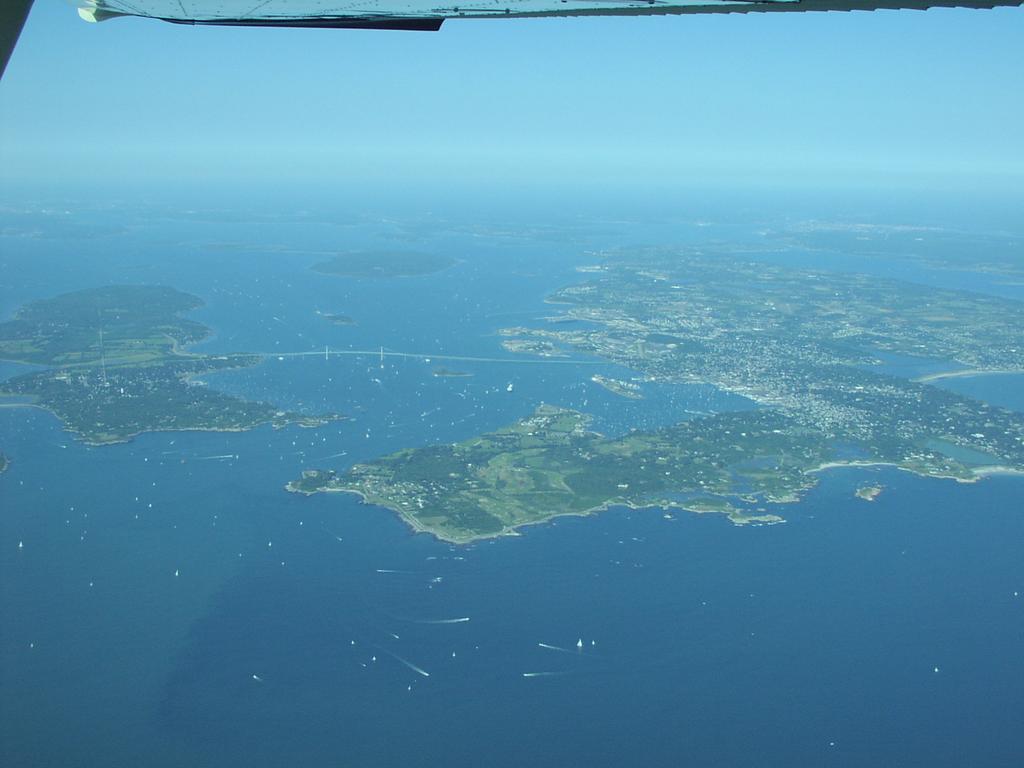
Flying home from Cape Cod one clear and sunny summer day, ATC puts us on the usual route over Long Island sound. While I'm not afraid of flying over water in single-engine airplanes, I do try to minimize the time spent farther than gliding distance from shore. I don't mind so much when the waters are warm. |
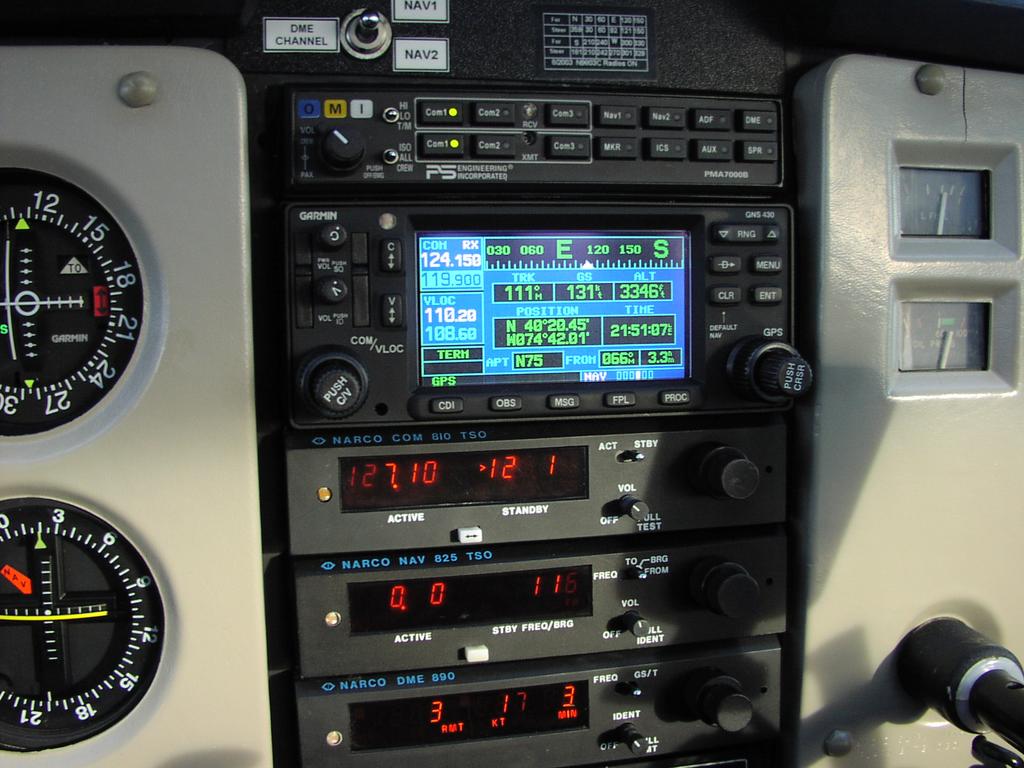
GPS has literally changed the way we fly. Even the most basic of GPS units provide extremely accurate position data, which contributes to exceptional situational awareness. |
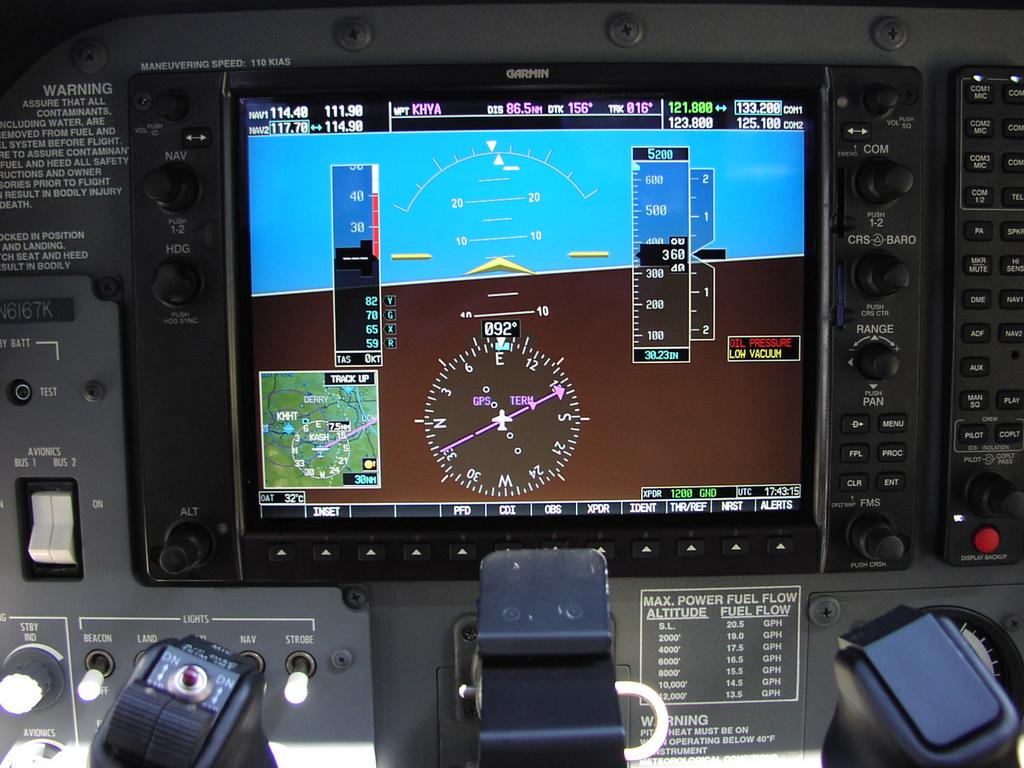
The primary flight display of the Garmin G1000 avionics suite combines solid state accelerometers and an air data computer to generate a picture of the aircraft's attitude about the three axes of flight (pitch, roll, and yaw). |